5th July 2025: Talking about Oracy
- Ian Cushing, Manchester Metropolitan University
- Su Hippisley, UCL IoE PGCE Secondary English
- Workshops, lunch, networking
Ian’s talk was entitled ‘Oracy, deficit thinking and linguistic in/justice. He says:
‘Oracy’ is a hot topic in England’s education policy and national discourse, with the last 12 months seeing a resurgence of interest from senior politicians, education policy makers, education consultants, academics, and teachers. In this keynote I provide a critique of the mainstream discourse about oracy, especially in how it often gets framed as a part of a social justice enterprise which claims that marginalised children can escape oppression by simply modifying their voices. First, I examine the language ideological foundations of how oracy was first theorised in the 1960s, showing how it was informed by a flawed theory of language rooted in deficit thinking which framed working-class children as linguistically deficient. I then show how these ideologies have remained intact over time and continue to underpin contemporary oracy initiatives. Pushing for the dismantling of deficit thinking, I call for new frameworks of linguistic justice which focus on the transformation of inherently unjust systems as opposed to the modification of marginalised individuals.
Su’s title was Talking to learn: Redefining oracy in a multicultural London Sixth Form. She presented with members of the Teaching and Learning Community at City and Islington Sixth Form College: Clare Laine (Business Studies), Nick Lawson (Sociology) and Debbie Bogard (History)
Su says:
‘We teach and teach and they learn and learn: if they didn’t, we wouldn’t,’ writes James Britton in Language, the Learner and the School (1969). Britton et al’s exploration of the language and talk of children shaped the discourse around oracy during for two decades after publication. Pupil talk was seen as vital for creating participatory pedagogies. How can the text offer opportunities for collaborative research on pupil talk today? Drawing on research conducted at a London sixth form college in 2024, we analyse the talk of A-Level students across the curriculum. ‘Oracy’ is back on the agenda (Labour manifesto, 2024). We argue that this version of oracy as a component of social mobility and its association with Standard English sits at odds with Wilkinson (1965) and Britton et al(1969). We ask whether the ‘expressive talk’ of students in A-Level classrooms offers another way of conceptualising lives, subjects and experience.’
We also featured workshops from Michael Walsh, from Let’s Think English at Kings, Debate Mate, and Darren Chetty on Philsophy4Children.
2025: What Space for English? English teachers, agency, and control.’
2023: Ways of Reading: Reading in and beyond the classroom
2022: Nightmares on the English corridor: perspectives on and approaches to teaching horror and the gothic in English and Media (BFI)
2020: Teaching the Writing Method
2020: Off the Page: Teaching Shakespeare through Production and Performance (Postponed due to Covid-19 pandemic)
2019: Digital Englishes (BFI)
2019: Whose English?
2019: We are our Stories
2018: Amplifying English (BFI)
2018: Active Approaches to teaching texts
2018: Becoming Our Own Experts: English teachers as researchers
2017: South Asia in the English Classroom (BFI)
2017: Incorrigibly plural …
2016: James Britton … Poetry … Race, representation and identity
Whose English? Whose Knowledge?
June 2019:
At a time when many departments are beginning to embark on gained time projects and evaluate their curriculum, the LATE committee felt it was important to support teachers in such work. Both keynotes came from the English and Media Centre; with Andrew McCallum speaking on ‘What Ofsted’s Education Inspection Framework Means for English – A Critical Overview’ and Barbara Bleiman ending the day considering the significance of ‘Group Work and Big Picture Thinking in English’. A optimistic and positive ending to the day that considered the wealth of knowledge that students may bring to the process of reading a literary text.
Amplifying English
December 2018:
This conference was collaboration with @rapClassroom and BFI Education exploring HipHop pedagogies and how they can be used in the English classroom. Differing slightly from how they have been used in the USA, UK HipHop ed focuses on creativity, collaboration, community and voice to develop pedagogies for use in all classrooms, but particularly English, creative arts and the humanities.
Find the programme HERE

Active Approaches to Teaching Text
Final Summer 2018 LATE CONFERENCE PROGRAMME
In our final conference of the 2017/18 term LATE teachers shared active ways of engaging with literary texts. Our Key Note speaker was Maggie Pitfield of Goldsmiths University of London and our closing Plenary was from Laurie Bolger a performance poet from Bang Said The Gun.

Becoming Our Own Experts: English teachers as researchers
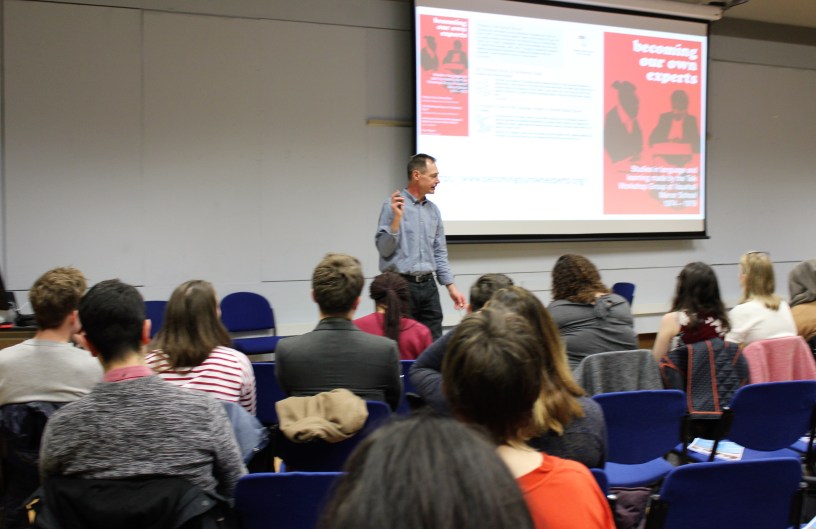
Key Note: John Yandell
Plenary Key Note Barbara Bleiman (English and Media Centre)
Take a look at the project she spoke about It’s Good To Talk, a self funded research project on group work- https://www.englishandmedia.co.uk/cpd-and-consultancy/our-projects/its-good-to-talk-developing-group-work-in-english
See the programme for more information on our wide ranging, classroom based research presentations.
South Asia in the English classroom
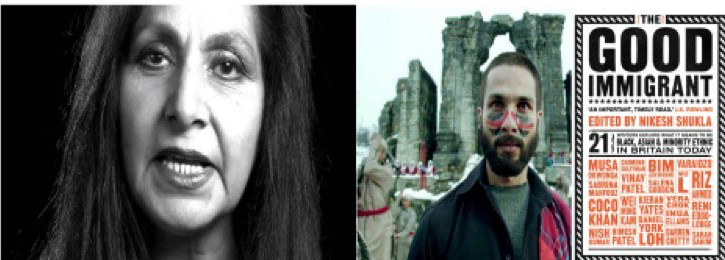
LATE/BFI conference, December 2017
LATE conference programme 1712
Imtiaz Dharker (audio file)
Incorrigibly Plural: a celebration of the life and work of Morlette Lindsay
LATE conference programme1703
Students from Alexandra Park School Spoken Word club performed for us at the end of the conference.
Race, representation and identity in English classrooms
10 December 2016

 londonenglishteachers.com